
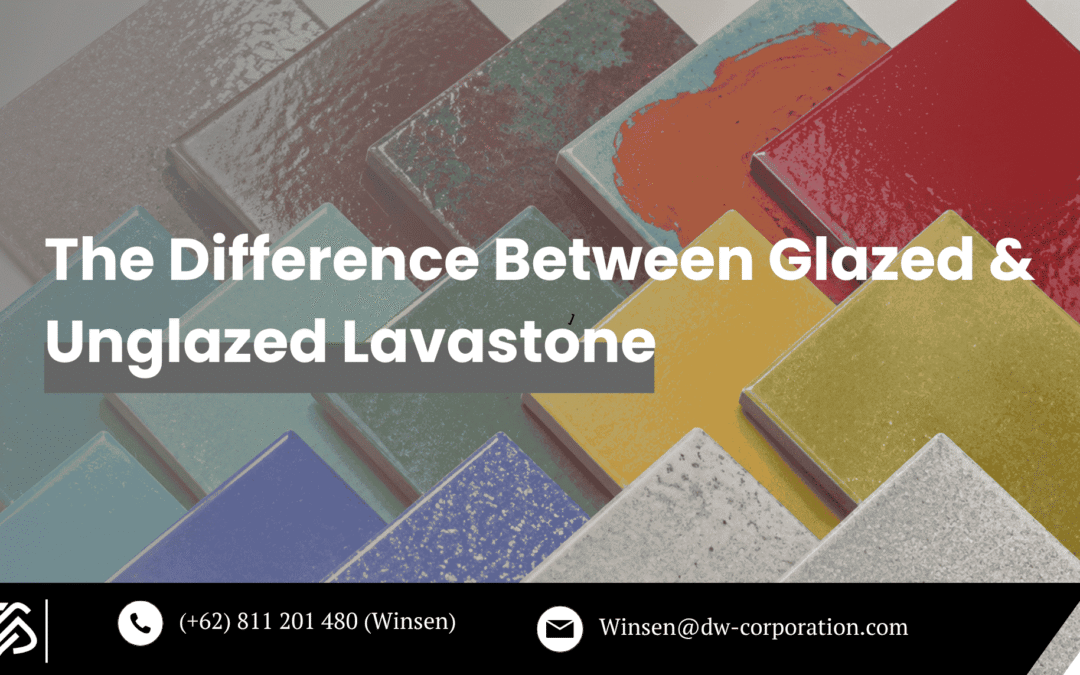
Lava stone has one of the more interesting backstories in the world of building materials, it’s literally molten rock from a volcano before it ever becomes a wall or a countertop. But once it’s quarried and ready for use, it splits into two very different products: glazed and unglazed lava stone. They come from the exact same volcanic origin, yet once installed, they look, feel, and behave quite differently. Here’s what actually separates them.
They Both Start as the Same Volcanic Rock
Before any processing happens, glazed and unglazed lavastone are identical. Both come from dense volcanic rock, usually basalt or andesite, formed when lava cools and hardens at the earth’s surface. This rock is naturally dark, heavy, and porous, with the amount of porosity depending largely on how quickly that lava cooled in the first place.
The two paths diverge after quarrying. Unglazed lavastone is simply cut, shaped, and finished as-is, so what you see is the rock’s true, untouched surface. Glazed lavastone goes one step further: a ceramic glaze is applied to the cut stone, and the whole piece is fired in a kiln at very high temperatures, permanently bonding the glaze onto the rock.
The Surface Feels Completely Different

This is usually the first thing people notice. Unglazed lavastone keeps its raw, matte texture, slightly rough to the touch, with the stone’s natural mineral structure visible, including small pits, dark mineral spots, and a bit of visible porosity. Nothing is hiding the fact that you’re looking at real, untreated volcanic rock.
Glazed lavastone, on the other hand, has a smooth, glossy surface that catches and reflects light, closer in feel to fired ceramic than to raw rock. Italian lava stone supplier Masetti Design describes glazed lava tiles as having deep, cracquele glazes over strong surfaces, while unglazed tiles are simply available with a more natural look and a range of different finishes.
Color Is Where the Real Gap Shows Up

Unglazed lavastone is stuck with whatever color the rock naturally has, usually somewhere in the grey, black, or brownish range depending on the source. There’s no added pigment here, so the color you see is the color the volcano gave it, nothing more.
Glazed lavastone opens that up completely. French manufacturer Pyrolave, one of the most established names in lava stone, offers dozens of glaze colors and finishes, and design outlet Remodelista puts it plainly: glazed lava stone has an advantage raw stones like marble and granite simply don’t have, color. Their guide notes the glaze can run from vivid blues and greens all the way to clean whites, metallics, and neutral shades, in both glossy and matte finishes.
Durability Holds Up on Both Sides, But Water Resistance Doesn’t
Both versions inherit the same underlying toughness from the volcanic rock itself. Lava stone supplier Ranieri notes that lava stone in general is highly resistant to stains, scratches, and heat, and that with proper care it can hold up for decades. So strength isn’t really the deciding factor between the two.
Water resistance is where they part ways. Unglazed lavastone stays porous, which means it absorbs moisture more easily and is more prone to staining or moss growth over time, especially outdoors or in humid conditions, if it isn’t sealed regularly. Glazed lavastone closes that porosity off entirely. The fired glaze seals the surface, which is exactly why tile retailer TileBar describes glazing in general as adding both color and protection to lava stone. Bali-based glazed lava stone supplier Stone Depot describes the same effect locally: the glaze layer closes the stone’s pores, giving a smoother, glossier, more refined surface without weakening the stone’s natural strength, and outdoors, that same glaze makes the material noticeably more resistant to water, moss, and staining, which makes upkeep a lot easier.
Day-to-Day Maintenance Isn’t Equal Either
Unglazed lavastone asks a bit more of you over time. It typically needs periodic resealing, more careful handling around acidic substances, and a closer eye for moss or staining if it’s installed outdoors or somewhere humid.
Glazed lavastone is noticeably easier to live with. Tile supplier C to C Tile notes that glazed lava stone doesn’t require any special care, just a wipe-down with warm water and soap, and that it generally won’t stain from acidic liquids like wine or vinegar. Ranieri does add one small caveat worth remembering: spills should still be wiped up reasonably promptly to keep that glossy finish looking its best over the years.
Where People Actually Use Each One
Unglazed lavastone tends to show up where a raw, earthy, natural-stone look is the whole point, garden walls, temple-style facades, rustic paving, or accent features where the rock’s untouched character is exactly what’s wanted.
Glazed lavastone shows up almost everywhere else. Design magazine Domino has covered lava stone projects spanning kitchen counters, large-format backsplash tile, and even floor tile, all relying on the glaze for both color and protection. C to C Tile lists a similarly wide range, including facades, swimming pools, table tops, glazed brick, vanity tops, and integrated sinks. The same pattern holds locally with Indonesian-sourced glazed lava stone, which gets used on building facades, interior walls, outdoor areas, and furniture surfaces like dining tables, coffee tables, and countertops.
One Honest Trade-Off Worth Knowing
Glazed lavastone does have a real limitation worth being upfront about: once it’s installed, the color is permanent. C to C Tile puts it bluntly, glazed lava stone can’t be refinished if you grow tired of the color, so whatever shade you pick is the shade you’re living with for the life of that surface. Unglazed lavastone doesn’t carry quite the same risk, since there’s no fired-on color layer to begin with, though resurfacing raw stone naturally enough comes with its own set of challenges too.
So, Which One Should You Actually Choose?
If the goal is a natural, grounded, slightly rustic feel, the kind of look where you want the stone to read as obviously real and untouched, unglazed lavastone is the more honest choice. It asks a little more upkeep in return, but that raw texture simply can’t be faked by anything else.
If the goal is color, polish, and long-term ease of maintenance, glazed lavastone is the stronger pick. It costs a bit more of your design flexibility down the line, since the color is locked in for good, but in exchange you get a surface that resists water, stains, and moss far better, and looks genuinely luxurious doing it, whether that’s a kitchen backsplash, a swimming pool edge, or an accent wall meant to be the room’s focal point.
Have questions about which type fits your specific project? Contact the Stone Depot team at
📞 (+62) 811 201 480 (Winsen)
📧 Winsen@dw-corporation.com
🌐 baliglazedlavastone.com